


Plumbers’ custom polo shirts are branded work uniforms chosen to identify your business while meeting the demands of each job; choose custom polo shirts for plumbers by workplace requirements, fit and logo method before comparing the total decorated cost. For your 2026 order, request an itemised quote and a free digital design proof from Workwear Martaustralia before approving production.
- Workwear Martaustralia suits Australian plumbing businesses buying custom polo shirts with embroidery or printing.
- Choose plumbing uniforms by site requirements first; a fluorescent colour alone does not establish suitability.
- Compare garment, decoration, setup, delivery and GST separately before approving branded workwear.
- Check the exact size chart and approve logo placement before production.
Why custom polo shirts matter for plumbers
A plumbing uniform has to work across different settings: a customer’s kitchen, a commercial maintenance visit and a construction site are not the same buying brief. Choose the shirt for the work, then add the branding. A corporate-looking polo does not replace site-required clothing.
Your logo helps identify the business behind the person arriving at the door. The practical question is where that logo remains visible without interfering with pockets, reflective tape or the garment’s intended use.
For a small plumbing business, ordering accurately also means recording sizes and decoration details so replacement orders are easier to specify. Use your 2026 uniform order to create that record, rather than relying on someone remembering which navy polo the team wore last time.
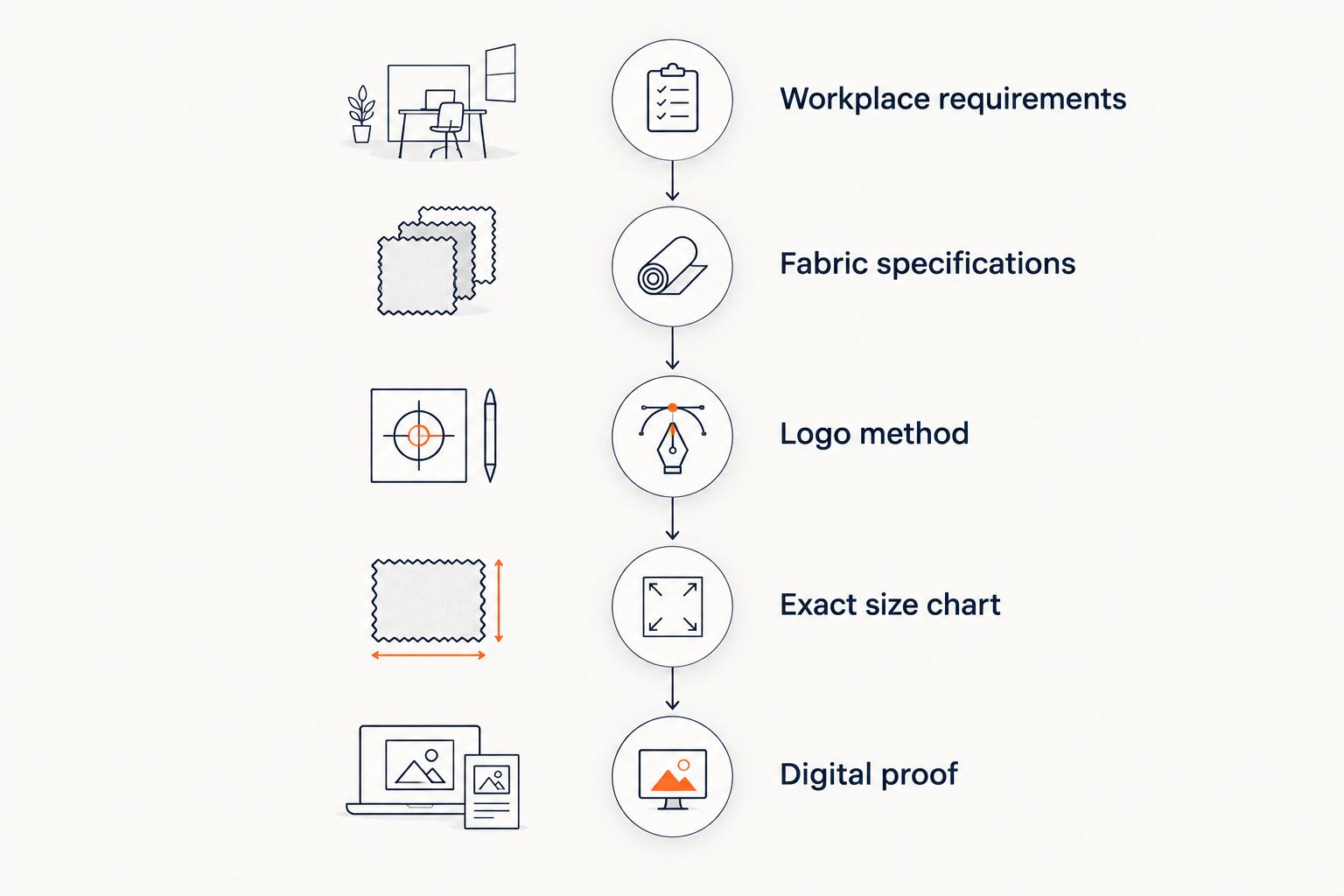
How to order custom polo shirts for your plumbing team
1. Define the jobs your polos must cover
Start with a simple worksheet listing the work your team performs and the clothing requirements attached to it. Separate domestic service work from jobs with written site rules. Ask the site manager or workplace safety contact for those requirements before choosing colours or reflective tape.
Do not assume a garment is suitable because its title includes hi-vis, rail or day/night wording. Check the manufacturer’s specifications for the exact style and colour, including any restrictions relevant to decoration. A general-purpose polo is not evidence of protection against heat, flame or chemicals.
Best for mixed workloads: build separate uniform specifications where the job requirements differ. You can keep the business identity consistent without forcing every worker into the same garment.
- List domestic, commercial and construction tasks separately.
- Record required colours, sleeves and visibility features.
- Check any task-specific protective clothing requirements.
- Confirm requirements with the relevant workplace contact.
- Keep the approved garment specification with your order.
2. Compare fabric specifications before choosing a style
Read the composition and fabric weight, not just the product name. GSM means grams per square metre: it describes fabric weight, not a complete comfort, durability or safety rating.
For example, the Hi Vis Lightweight Long Sleeve Micromesh Polo with Pocket uses 100% polyester micromesh at 140 gsm. The Hi Vis Long Sleeve Cotton Back Polo with Pocket uses 55% cotton and 45% polyester at 190 gsm. Those are different fabric constructions, not interchangeable versions of the same shirt.
Best for checking comfort: assess fabric feel and movement alongside the written specification. Cotton-backed fabric and polyester mesh offer different choices, but neither composition alone establishes suitability for every plumbing task. Ask for clarification where the listing does not answer your question.
- Record fibre composition and GSM for each shortlisted style.
- Compare mesh, cotton-backed and jersey constructions.
- Check sleeve length against workplace requirements.
- Consider whether a chest pocket is useful for the role.
- Read the exact garment’s care instructions.
3. Choose the logo method around the garment
Begin by writing down what you actually need displayed: business name, logo and any essential contact detail. Remove anything that will become unreadable at the intended size. A crowded chest logo is not improved by adding more information.
Embroidery is best for a stitched business logo; DTF printing is best for artwork that needs a printed finish. DTF means direct-to-film: the design is printed onto a film and transferred to the garment. Embroidery stitches the design into the fabric. Both need approval for the selected shirt and artwork.
Workwear Martaustralia offers custom polo shirts with embroidery and printing, but the method still needs to suit your chosen fabric, logo and placement. Ask for the two methods to be quoted against the same brief rather than comparing unrelated examples.
- Supply the clearest original artwork you have.
- Specify each logo position separately.
- Ask whether small lettering needs simplification.
- Check pocket access and seams around the placement.
- Keep decoration clear of reflective tape and required visibility areas.
4. Measure your team against the exact size chart (where one is published)
Use a spreadsheet to collect each person’s measurements and selected size. Do not transfer sizes automatically from a different brand or from a casual T-shirt. First check whether the supplier’s chart shows body measurements or finished garment measurements; comparing the wrong measurements produces the wrong decision.
Ask staff to check reach, bending and shoulder movement as well as standing fit. Plumbing work involves positions that a mirror check does not capture. A pocket, sleeve or hem that feels acceptable while standing can interfere when reaching into a cupboard.
Best for reducing sizing errors: confirm fit before decoration. For your 2026 order, retain the exact style code and size decision for each worker, not just a list marked small, medium and large.
- Use the chart for the exact garment style.
- Distinguish body measurements from garment measurements.
- Check chest, length and sleeve measurements where provided.
- Confirm movement while bending and reaching.
- Record each worker’s approved style and size.
5. Build an itemised order and compare like for like
Create the order manually before requesting a quote: garment style, colour, size breakdown, quantity, logo method and positions. Ask whether a decorated order of 5 garments meets the conditions for your selected styles and artwork; do not apply a team-deal quantity to an unrelated product.
The product cards below show supplied catalogue prices in Australian dollars. Their GST treatment is not specified here, and the figures do not establish a decorated-order total. Request written confirmation of GST, garment cost, decoration, setup and delivery before paying.
For a worked comparison, use the same 5-garment brief for both quotes: identical shirts and sizes, the same front logo and the same delivery destination. Compare the total payable divided by the garment quantity, while keeping one-off setup separate for future reorders.
- Separate garment and decoration charges.
- Identify setup or artwork preparation charges.
- Confirm delivery and GST treatment explicitly.
- Check whether each added logo position changes the quote.
- Record the total payable and what it includes.
6. Approve the proof and confirm the production conditions
Review the digital proof against your written order, not from memory. Check spelling, artwork version, garment colour, logo positions and the specified dimensions. A digital proof helps check the proposed design; it does not let you feel the fabric or test the fit.
Request a free digital design proof from Workwear Martaustralia before production. Confirm that the proof covers every garment variation, especially when the team is ordering both ordinary polos and reflective styles.
For a 2026 start date, ask for a written production estimate tied to artwork approval and a separate delivery estimate tied to dispatch. Do not treat production time as delivery time. Confirm the conditions before committing your team to a uniform changeover date.
- Check business name and contact details character by character.
- Match garment styles and colours to the order.
- Approve logo dimensions and positions in writing.
- Confirm when the production estimate begins.
- Keep the approved proof and final quote together.
The ordering sequence matters: settle the workplace brief before the garment, and settle the garment before approving the artwork. Otherwise, a later shirt change can require another placement decision.
Compare polo options for your plumbing business
These options address different uniform briefs; they are not a safety ranking. The comparison uses the supplied product descriptions, so check the complete manufacturer specifications before approving any style for a controlled workplace.
| Option | Best for | Stated specification | Key limitation |
|---|---|---|---|
| Hi Vis Lightweight Long Sleeve Micromesh Polo with Pocket | Teams comparing a lighter fabric weight | 100% polyester micromesh, 140 gsm; left chest pocket with pen divide | Fabric weight does not establish workplace compliance or protective performance. |
| Hi Vis Long Sleeve Cotton Back Polo with Pocket | Teams wanting a cotton-backed option with a pocket | 55% cotton, 45% polyester, 190 gsm; left chest pocket with pen divide | The supplied description does not establish suitability for night work or specialist hazards. |
| Winning Spirit Men's Cotton Back Truedry S/S Polo PS33 | Customer-facing work without a hi-vis requirement | 60% cotton, 40% polyester, 160 gsm | A short-sleeve corporate-style choice is not a substitute for required site clothing. |
Choose the lightweight micromesh option for a lighter listed fabric, the cotton-backed pocket option for that construction, and the PS33 for a non-hi-vis uniform brief. Check fit and decoration suitability before making the final selection; GSM alone does not decide the winner.


Common mistakes plumbers make when ordering polos
Using one shirt specification for every job
A domestic service uniform and a construction-site uniform have different briefs. Keep a consistent logo, but check the required garment features separately. Business branding does not establish site suitability.
Putting the logo over useful garment features
A chest pocket changes the available decoration area. Reflective tape and visibility areas also need consideration. Ask for the proposed position on the exact style instead of approving a logo floating on a blank background.
Comparing a blank-shirt figure with a decorated quote
A garment-only price does not include an unstated embroidery or printing service. Compare the same quantities, placements, setup treatment, delivery destination and GST basis. Keep the itemisation even when you prefer one total for budgeting.
Reordering from a photo alone
A photo does not reliably identify the fabric, fit or decoration dimensions. Retain the style code, approved artwork and size breakdown from your 2026 order. That record gives the supplier a specific brief when you add another plumber to the team.
FAQ
What are the best custom polo shirts for plumbers?
The best custom polo shirts for plumbers match the job’s clothing requirements, fit the wearer and support the chosen logo method. Compare exact garment specifications before choosing between polyester mesh, cotton-backed fabric and corporate-style polos.
Do plumbers need hi-vis polo shirts?
Plumbers need hi-vis clothing where the workplace or task requires it. Confirm the exact garment requirements with the site contact; fluorescent colour or reflective detail alone does not establish suitability.
Is embroidery or DTF better for plumbing uniforms?
Embroidery suits a stitched logo, while DTF suits artwork requiring a printed finish. Ask the supplier to assess your actual design, fabric and placement before choosing either method.
Can I order just 5 branded polos for my plumbing business?
Ask Workwear Martaustralia to confirm the terms for a 5-garment decorated order using your selected styles and logo. Confirm whether mixed sizes, colours or garment types affect those terms before approving the quote.
How much do custom polo shirts for plumbers cost?
The total depends on the garment, decoration method, logo positions, setup, delivery and GST. Request an itemised quote; a catalogue garment price is not a confirmed decorated-order total.
How do I choose the right polo sizes for my team?
Use the exact style’s size chart and check whether it lists body or garment measurements. Confirm movement while bending and reaching, then retain each worker’s approved style and size.
Does a digital proof confirm how the polo will fit?
No, a digital proof checks the proposed artwork and placement, not physical fit or fabric feel. Confirm sizing separately and check the logo dimensions against the selected garment.
Are branded polos from an Australian supplier Australian-made?
An Australian supplier or Australian decoration does not establish that the garment was manufactured in Australia. Ask for product-specific evidence before making an Australian-made claim.
One last thing
Keep a uniform order record, not just an invoice. Save the garment code, colour, sizes, logo file, placement dimensions and approved proof together. An invoice total cannot tell the next person ordering uniforms which artwork version to use.
For your next order, send Workwear Martaustralia that record and request an itemised quote plus a free digital mock-up before production. Ask for any changes to be identified explicitly rather than assuming the repeat order is identical.
