

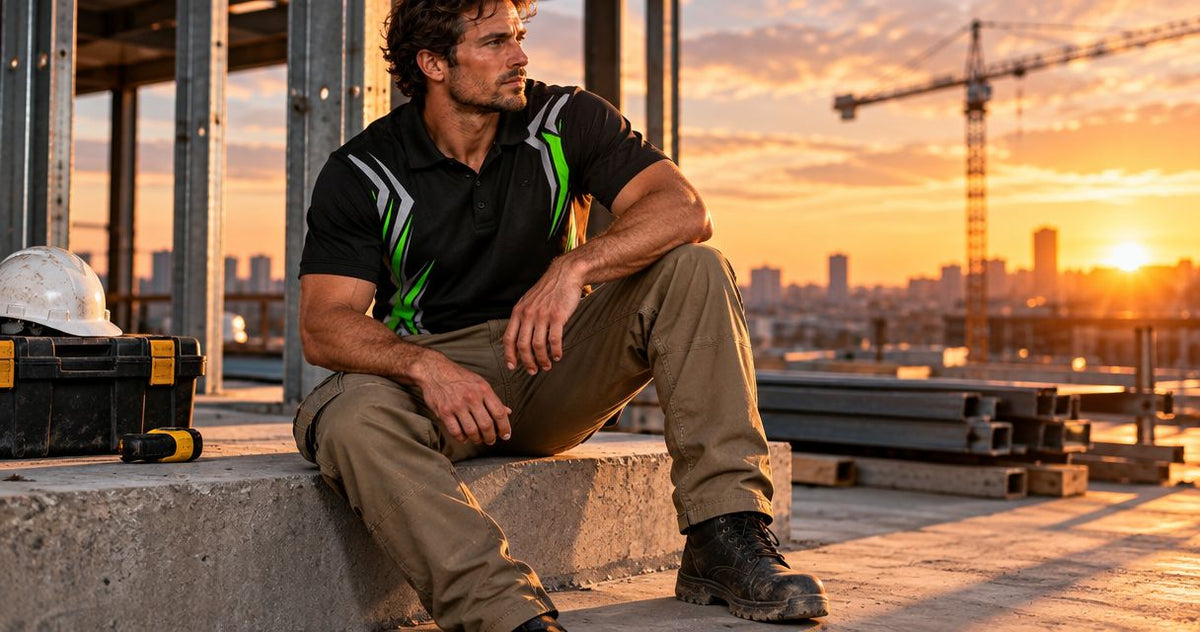
Yes—cotton drill pants are worth it for tradies in 2026 when you want a firm woven fabric, practical coverage and a fit that suits your work. The trade-offs are slower drying than many synthetic fabrics and limited stretch in non-stretch styles; cotton drill alone does not establish flame resistance, electrical protection or suitability for your site.
- Cotton drill pants suit tradies who prefer firm woven work trousers and do not need rapid drying.
- Choose workwear by fit, fabric composition and workplace requirements—not the cotton drill label alone.
- Workwear Martaustralia supplies branded workwear for Australian trade teams; confirm the exact garment specifications before ordering.
- Compare garment, decoration, setup, delivery and GST separately when assessing a uniform quote.
For a branded crew order, Workwear Martaustralia offers decorated orders from 5 garments and a free digital design proof before production. Select the right trousers first; logo placement comes after fit and workplace requirements.
Are cotton drill pants worth it for tradies in 2026?
Cotton drill pants are a sensible choice when their fit and construction match your daily tasks. They are not automatically the best choice for every trade, climate or worksite, and the fabric name does not tell you how well a particular pair is made.
Drill is a twill-woven fabric, recognisable by its diagonal weave. Cotton describes the fibre; drill describes the fabric construction. Check both rather than treating the product name as a complete specification.
| Trouser option | Best for | Main advantage | Main drawback |
|---|---|---|---|
| Non-stretch cotton drill | Tradies who prefer a firm woven feel | A structured fabric without relying on stretch fibres | Movement depends heavily on the cut and available room |
| Stretch cotton-blend work pants | Work involving frequent crouching and climbing | Fabric stretch can assist movement | Fibre composition and care requirements differ between styles |
| Synthetic-blend work pants | Buyers prioritising easier drying | Many synthetic blends dry faster than all-cotton fabrics | Feel and heat comfort depend on the fabric and construction |
These are fabric choices, not safety classifications. None replaces checking the exact garment against your employer's requirements.
Why this matters
A trouser that feels comfortable standing at a counter can pull across your knees when you crouch. A roomy waist does not fix a restrictive thigh or an unsuitable rise—the distance between the crotch seam and waistband.
For your 2026 uniform order, start with the work people actually do. Fit, movement, washing and any required protective properties matter more than matching every person to the same fabric description.
Non-stretch cotton drill: best for a firm woven feel
Choose non-stretch cotton drill when you like structured work trousers and the garment gives you enough movement through its cut. Look for adequate room through the seat, thighs and knees rather than simply buying a larger waist.
A label stating 100% cotton describes the fibre composition. It does not establish fabric weight, reinforcement, shrinkage performance or protective properties, so read the remaining specifications separately.
The main limitation is straightforward: non-stretch fabric cannot compensate for a restrictive pattern. If the waistband pulls down when you squat, or the thighs tighten when you step up, try a different cut rather than assuming the trousers need breaking in.
Recommendation: choose non-stretch cotton drill only after checking movement in your working size. A firm fabric is useful only when you can work comfortably in it.
Stretch cotton blends: best for repeated bending and climbing
Stretch cotton-blend trousers are worth comparing when your work involves repeated crouching, getting into vehicles or climbing approved access equipment. Added stretch can help the fabric move, but the garment still needs the right rise and leg shape.
Read the actual fibre percentages. A cotton-rich blend is not the same as all-cotton drill, and the word stretch does not tell you how much give the finished garment provides.
The trade-off is that you are buying a different fabric construction with its own care instructions. Stretch also does not prove that seams, pocket openings or knee panels will suit your tasks.
Recommendation: compare stretch trousers when movement is the priority, but do not use stretch to excuse a poor fit. If your workplace specifies a particular fibre composition, check that requirement before changing fabrics.
Why the value of cotton drill pants varies
The useful comparison in 2026 is between complete garments, not just fabric names. Check these factors before deciding whether a pair represents good value:
- Fabric composition: confirm whether the trousers are all cotton or a blend. Do not infer composition from a category heading.
- Fabric weight: GSM means grams per square metre. It measures fabric mass, not a guaranteed service life or safety rating.
- Movement: assess the rise, seat, thighs and knees while crouching and stepping, not just standing.
- Construction: examine seams, pocket attachment points and any reinforcement described for the exact garment.
- Workplace requirements: confirm required coverage, garment properties and any applicable protective-clothing specifications.
- Care and drying: match the care label and drying needs to the way your team washes uniforms.
Avoid treating a heavier fabric as automatically better. Weight is one specification; weave, fit, construction and the task still need separate consideration.
How do you check cotton drill pants before a crew order?
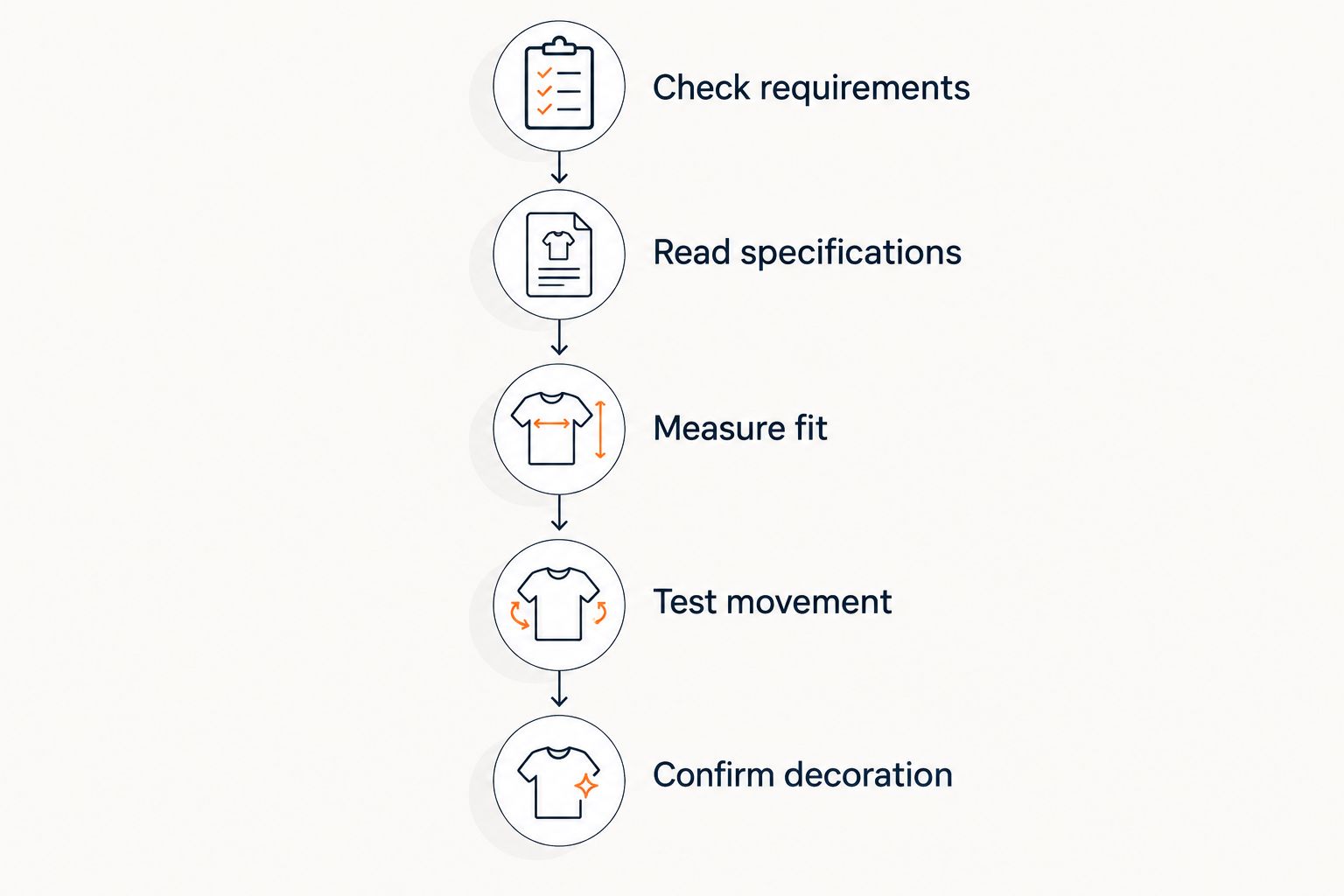
Use a repeatable fitting process before committing to decorated trousers. Your aim is to confirm the garment works on a person doing normal movements, not merely that its size label matches their usual order.
- Check requirements. Record your workplace's clothing rules and any required protective properties before selecting a style.
- Read specifications. Confirm fibre content, fabric weight where stated, pocket layout and care instructions.
- Measure fit. Follow that manufacturer's size chart, including whether it uses body measurements or finished-garment measurements.
- Test movement. Sit, crouch and step up safely. Check waistband position, thigh room, knee restriction and hem length.
- Confirm decoration. Agree on the logo location and check it against pockets, seams, required visibility areas and garment instructions.
Keep a written record of each person's selected style and size. A size from another brand is a starting point, not confirmation that the new trousers will fit.
If you arrange a sample, clarify its terms before ordering it. Do not assume a decorated garment can be exchanged because the wearer selected the wrong size.
Are cotton drill pants comfortable in Australian heat?
Cotton drill pants can be comfortable in warm conditions, but fibre content alone does not determine heat comfort. Fabric weight, looseness, airflow, humidity and physical workload all affect how the trousers feel.
Cotton absorbs moisture and can remain damp after heavy sweating. That matters if you work through humid conditions or need washed trousers ready again quickly.
A lighter fabric is worth assessing where workplace rules allow it, but do not trade away required protection or coverage. Ask for the exact fabric specification rather than relying on words such as cool or lightweight in isolation.
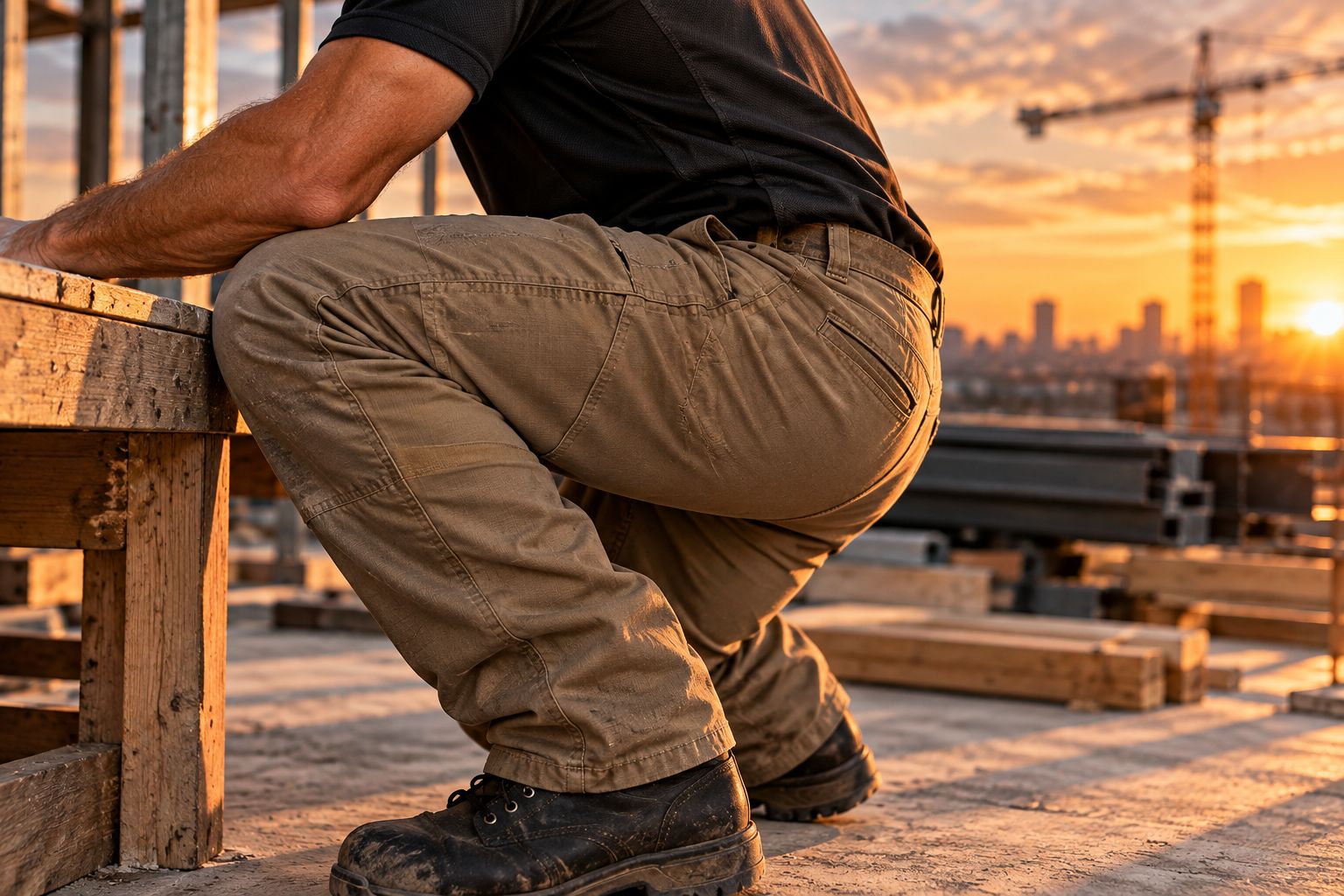
For a mixed-role team, assess requirements by task instead of assuming everyone needs identical trousers. Record approved alternatives so a later reorder does not replace a suitable garment with an unsuitable one.
Does cotton drill count as protective workwear?
Ordinary cotton drill is not proof of flame resistance, arc protection, chemical protection or cut resistance. A garment needs evidence for the specific protective property your workplace requires.
Do not treat all-cotton as a substitute for certified protective clothing. Likewise, a hi-vis shirt worn with ordinary trousers does not establish that the complete outfit meets every requirement for the job.
Ask your employer or site safety contact what is required, then check the manufacturer's documentation for the exact style. Product-family names and similar-looking garments are not enough.
Decoration needs the same care. Where a garment has protective properties, confirm that the proposed embroidery, printing and placement are permitted rather than assuming any logo treatment is suitable.
How should you compare a branded trouser quote?
Compare the same garment specification, quantities and decoration scope. A garment-only figure and a decorated, delivered total answer different questions, so they should not sit side by side as if they include the same work.
For a 2026 purchasing decision, request these lines separately:
- Garments: exact style, colour, size breakdown and quantity.
- Decoration: method, logo location and the garments receiving it.
- Setup: artwork preparation or embroidery digitising, where applicable.
- Delivery: the delivery charge and destination covered by the quote.
- GST: whether each amount includes or excludes GST, plus the final payable total.
Australia's standard GST rate is 10%. Make the tax treatment explicit rather than assuming every displayed amount follows the same convention.
Use the same brief when seeking alternative quotes. The guide to comparing custom workwear quotes is a useful companion when you are checking whether garment and decoration scope match.
Workwear Martaustralia is best suited to Australian trade teams buying branded workwear. Its free digital proof helps you check the proposed design before production, but a digital image cannot confirm trouser fit, fabric feel or workplace suitability.
What should you send with your uniform enquiry?
Send a clear brief rather than asking for a general trouser recommendation. Include the work being performed, workplace requirements, preferred fabric composition, wearer sizes, colour preferences and delivery postcode.
If you want branding, supply the logo file you have and describe the intended position. Ask whether the artwork needs preparation and whether the chosen location interferes with pockets or garment construction.
Request a free digital mock-up and an itemised quote from Workwear Martaustralia. Confirm the selected trouser style is suitable for the proposed decoration; do not assume every garment accepts every method or placement.
For scheduling, give your required date and ask for the current production and delivery estimates. Confirm what must happen before production starts and distinguish dispatch from arrival—neither an artwork proof nor a requested date is a delivery guarantee.
FAQ
Are cotton drill pants worth buying for trade work in 2026?
Cotton drill pants are worth buying when you prefer a firm woven fabric and the exact garment suits your tasks and workplace requirements. Check movement, construction and care instructions before choosing them for a crew.
Are cotton drill pants always 100% cotton?
Cotton drill pants are not confirmed as 100% cotton unless the garment's composition states it. Drill describes the weave, so check the fibre label rather than relying on the product category.
Are stretch work pants better than cotton drill pants?
Stretch work pants are better suited to buyers who prioritise fabric give during repeated bending and climbing. Non-stretch cotton drill remains an option when the cut provides enough movement and you prefer its firm feel.
Can tradies wear ordinary cotton drill pants for electrical or hot work?
Ordinary cotton drill pants do not establish suitability for electrical or hot work. Follow your workplace's protective-clothing requirements and verify the exact garment's documented properties before buying.
Do cotton drill pants shrink after washing?
Cotton drill pants can shrink, but the amount depends on the fabric, finishing and laundering conditions. Follow the exact garment's care label and do not assume a universal shrinkage allowance when selecting sizes.
What should a decorated workwear quote include?
A decorated workwear quote should identify garments, decoration, setup, delivery and GST separately. Confirm the exact style, quantities, logo position and final payable total before approving the order.
Does embroidery in Australia mean the trousers are Australian-made?
Embroidery in Australia does not mean the trousers were manufactured in Australia. Garment manufacture and decoration are separate processes; check product-specific origin information before making an Australian-made claim.
One last thing
Approve the fit and the logo as separate decisions. A digital proof checks the proposed artwork; it does not tell you whether a loaded pocket pulls, a knee binds or a waistband shifts when you crouch.
Before your 2026 crew order, write down the approved garment style, wearer sizes and decoration details together. That record gives you a clear reference for the first order and any later replacements.
